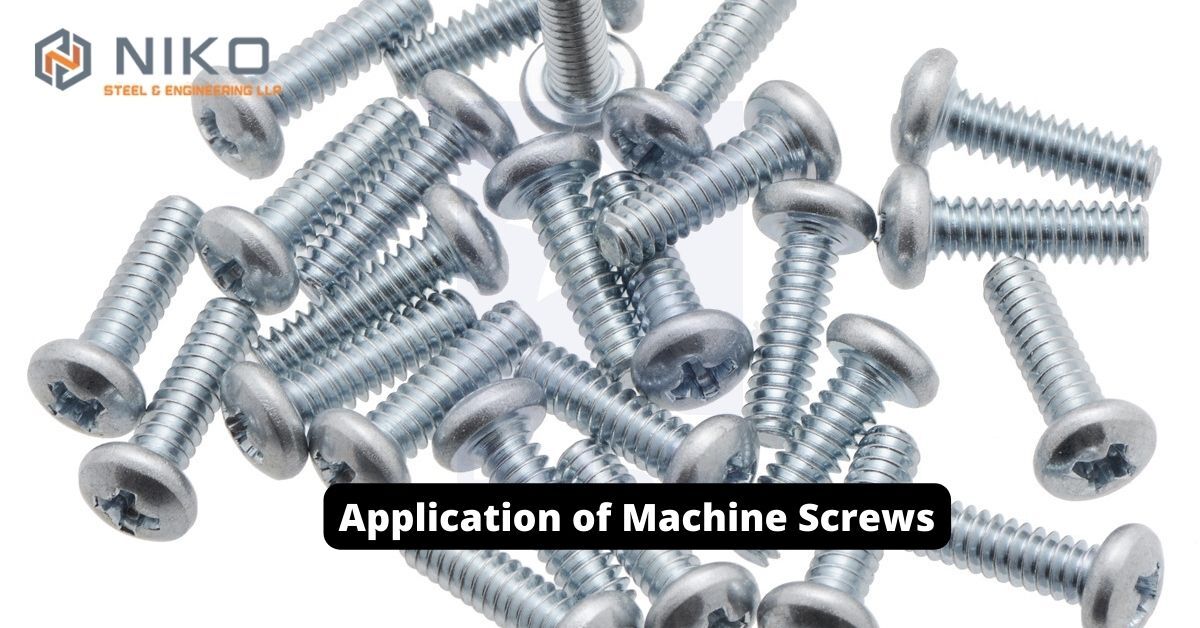
The most common way to connect machines is with fasteners, such as Machine Screws. The screws used in milling machines, industrial lathes, and appliances are examples of machine screws. Connecting two or more pieces, these fasteners are otherwise quite simple. Learn more about how they work in the next section.
The screws used in machines are made from metal alloys that can be toughened to withstand the loads that they will encounter. Unlike other screws, they come with a threaded shank at one end and a set screw at the other. While the head is attached to a single piece of metal, it is held in position by a set screw.
In a nut and bolt joint, parallel threads stop a piece from spinning around its axis after a certain amount of torque is applied. If you don’t utilize this proper tightening technique, your machine or appliance could be harmed.
How Do Machine Screws Work?
It is known as a machine screw when the thread is designed for use in a machine. Whenever driven into a hole already cut in a machine, it holds the pieces together. A fully threaded shank is placed after the head in a machine screw. The shank’s outside threading makes it possible to drive machine screws into tapped holes with internal threads.
Despite being used in machines, machine screws must be able to withstand liquids and vibrations. Machine screws made of thin, weak materials may crack if they are subjected to vibrations from a machine. Vibrations produced by machines frequently break weak fasteners. Alternately, if moisture is present, low-quality machine screws may rust or corrode.
Applications of Machine Screws
Machine screws have a wide range of uses. They are employed throughout a variety of sectors, including manufacturing, architecture, and healthcare.
Machine screws are used in production to join pieces together. They offer a solid and reliable connection between two metal or other material pieces. In addition, machine screws may be utilized in construction in place of conventional bolts or nails.
They are also employed in the medical field for a variety of purposes, such as holding splints in place during the surgery and securing IV bags and tubing.
Machine screws are used in a variety of applications. They’re commonly used to secure nuts to bolts, but they can also be used to secure other things. Machine screws can also be used to secure brackets, fasteners, and more.