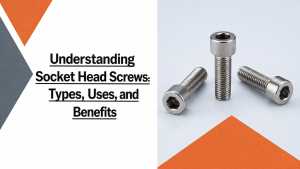
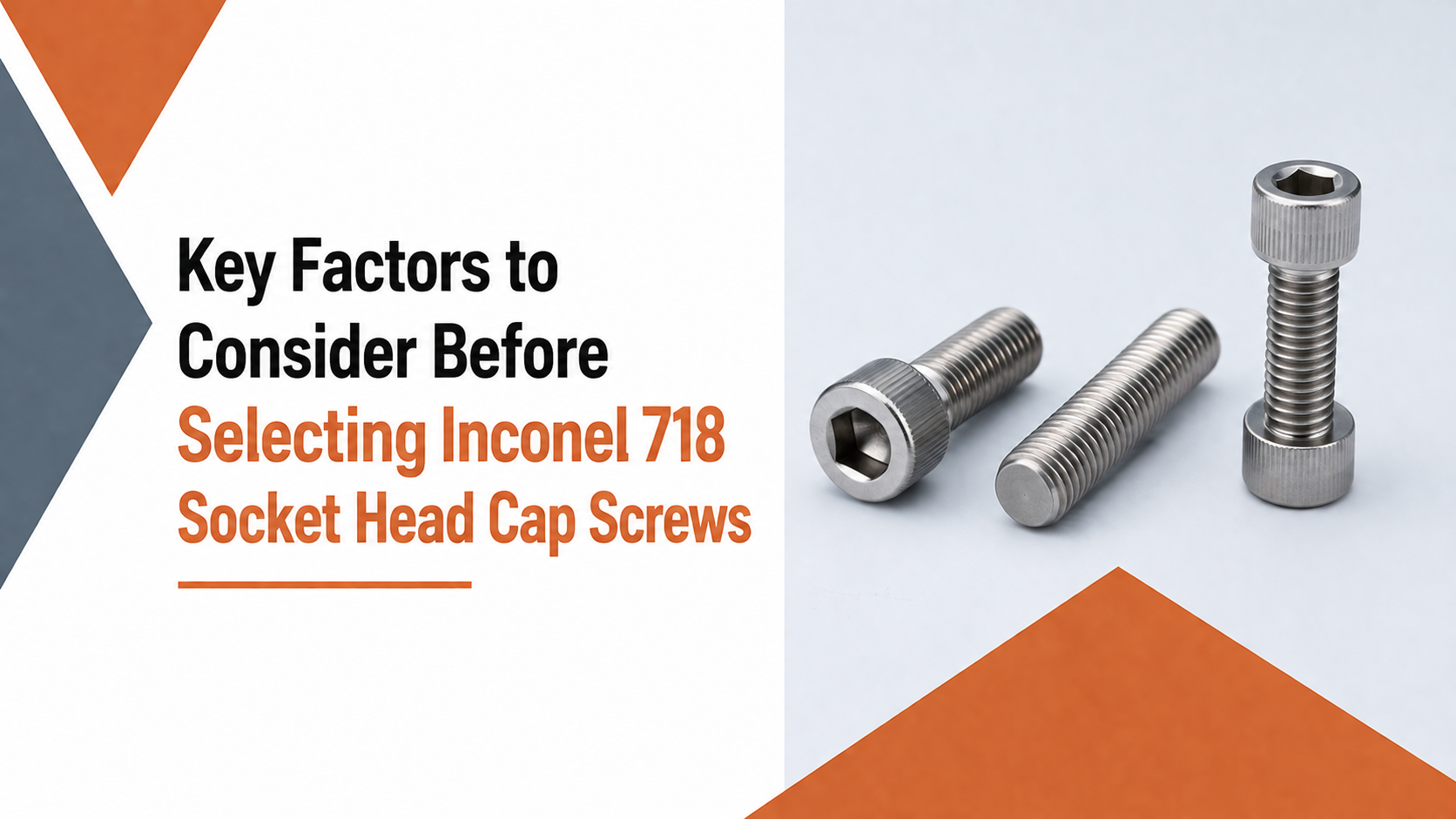
Fastener selection determines whether a critical joint holds for years or fails within months of commissioning. A single undersized bolt in a compressor casing, or a mismatched thread in a pressure vessel flange, can trigger unplanned shutdowns and costly rework. Inconel 718 Socket Head Cap Screws solve this problem in environments where standard stainless steel or alloy steel fasteners degrade under heat, pressure, or corrosive attack. Engineers reach for them precisely when joint failure is not an option.
When Should You Choose Inconel 718 Socket Head Cap Screws?
Standard 316 stainless steel fasteners lose tensile strength above 500°C. Alloy steel variants corrode rapidly in chloride-rich atmospheres instead. Inconel socket head cap screws hold onto more than 90% of their room-temperature strength at 650°C, a margin that suits turbine housings, exhaust manifolds, and reactor closures running continuous high-heat cycles.
Pressure vessels rated above 10,000 PSI need fasteners that resist creep under sustained clamping load. Inconel 718 meets this requirement through age-hardening. Offshore platforms and chemical plants add chloride and sulfide exposure that pits ordinary alloy steel within a single maintenance cycle, while rotating equipment under vibration and thermal cycling draws on Inconel 718’s fatigue endurance to cut the frequency of bolt replacement in compressor trains and pump assemblies.
Key Factors to Evaluate Before Selection
Selecting the right fastener depends on more than material grade. The following factors determine whether Inconel 718 performs reliably across its intended service life.
- The operating temperature window will be the determining factor for the potential benefit of the age-hardened strength and creep resistance of Inconel 718 over standard alloys.
- Corrosion exposure from chlorides, sulfides or acidic process fluids dictates whether Inconel 718’s nickel-chromium matrix delivers meaningful service life extension.
- The superior endurance limit of Inconel 718 to repeated stress reversals, also called mechanical load/fatigue cycles, also has an impact on its size.
- The pressure conditions are applied to the assembly that determines the proof load and clamping force to which the fastener is subjected and must not be permanently altered.
- Thermal expansion compatibility between Inconel 718 and mating flange materials prevents loosening or overstress as the assembly heats and cools.
- The shear strength of Inconel 718 is greater than other nickel alloy materials and the length of thread engagement must reflect this.
- The dimensions of the inch socket head cap screws need to be exactly the same as the bolt circle and counterbore depth listed on the engineering drawing.
- Adherence to ASTM, ASME and ISO standards certifies traceable material testing and stable mechanical properties for each batch.
Selecting the Right Size and Dimensions
Matching diameter and length to the joint’s design load prevents both under-torquing and thread damage. Inch socket head cap screw dimensions for Inconel 718 follow the same ANSI/ASME B18.3 envelope as standard alloy steel screws. Socket depth and key engagement still need checking against detailed dimension charts before ordering, since head hardness affects wrench clearance, and length tolerance matters even more in preloaded joints, where half a millimeter of variance changes clamping force across the entire bolt pattern.
|
Diameter |
Length | Thread Type | Head Diameter |
Typical Application |
|
1/4″ to 3/8″ |
0.5″ to 3″ | UNC / UNF | 0.375″ to 0.5625″ | Instrumentation flanges, small valve bonnets |
| 1/2″ to 3/4″ | 1″ to 6″ | UNC / UNF | 0.75″ to 1.125″ | Compressor housings, turbine casings |
| 7/8″ to 1″ | 2″ to 8″ | UNC / UNF | 1.3125″ to 1.5″ | High-pressure valve bonnets, reactor closures |
| 1.25″ to 1.5″ | 3″ to 10″ | UNC / 8-UN | 1.875″ to 2.25″ |
Large pressure vessel flanges |
Material Compatibility Matters
Inconel 718 pairs well with stainless steel flanges and nickel alloy components because their thermal expansion coefficients stay close across a wide temperature band, reducing joint stress during heating and cooling cycles. Turbine components and pressure vessels benefit most from this compatibility, since mismatched expansion rates loosen bolted joints over repeated thermal cycles. Direct contact between Inconel 718 and carbon steel or aluminum tells a different story in wet or marine environments, where it creates a galvanic cell that accelerates corrosion of the less noble metal. Isolating dissimilar metals with compatible washers or coatings prevents this failure mode in mixed-material assemblies.
Industry-Specific Selection Considerations
Aerospace
Airframe components endure millions of load cycles, and fatigue causes more fastener failures than any other mechanism. Inconel 718’s endurance limit outperforms alloy steel under this stress, so aerospace specifications weigh fatigue resistance above tensile strength.
Oil and Gas
Offshore platforms and downhole equipment sit in chloride-heavy, sour environments for years without a maintenance window. Corrosion resistance drives selection here, since one pitted bolt in a wellhead assembly can force an unplanned shutdown.
Chemical Processing
Process fluids in chemical plants range from strong acids to caustic solutions, and each reacts differently with fastener alloys. Chemical compatibility outweighs cost or lead time, because the wrong material degrades within weeks of exposure.
Marine
Saltwater immersion and salt-laden air attack fasteners continuously, pitting standard alloy steel within months. Chloride resistance becomes the deciding factor on hulls, deck fittings, and subsea structures exposed to constant spray.
Power Generation
Turbines and boiler assemblies run at sustained temperatures above 500°C for thousands of operating hours. High-temperature stability matters most here, since fasteners that lose strength under heat risk loosening the entire joint.
Common Selection Mistakes
Often, procurement teams don’t re-evaluate service conditions and simply use familiar specifications, and this habit leads to premature fastener failure.
- If fasteners are selected only on the basis of tensile strength, creep, fatigue and corrosion behavior in service are not considered.
- If the service temperature is ignored, fasteners that are rated for lower thermal limits than required for the application will suffer premature loss of strength.
- Choosing incorrect dimensions causes thread stripping or insufficient clamping force, especially when substituting metric hardware for inch specifications.
- Overlooking thermal expansion differences between Inconel 718 and mating materials results in joint loosening after repeated heat cycles.
- Ignoring material compatibility between dissimilar metals accelerates galvanic corrosion in marine or wet industrial environments.
Best Practices Before Procurement
A structured procurement checklist prevents costly substitutions and delays, confirming that the specified fastener matches actual engineering requirements.
- Review engineering drawings carefully to confirm the exact grade, dimension, and finish specified for each fastener position.
- Verify dimensional requirements against the mating component’s bolt circle, thread pitch, and counterbore depth before placing an order.
- Confirm standards compliance with ASTM, ASME, or ISO specifications relevant to the application and regulatory jurisdiction.
- Check traceability documentation, including heat numbers and mill test certificates, for every batch received.
- Review supplier documentation, such as material test reports and third-party inspection certificates, before accepting delivery.
Conclusion
The selection of Inconel 718 Socket Head Cap Screws is not a single specification but a balanced trade-off of temperature, corrosion exposure, mechanical load, dimensional accuracy and material compatibility. Engineers who look at all five factors together avoid premature joint failure and lower lifecycle maintenance costs. For over 4 decades, Niko Steel & Engineering LLP has been stocking nickel alloy and stainless steel fasteners.