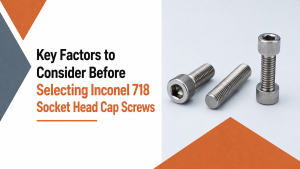
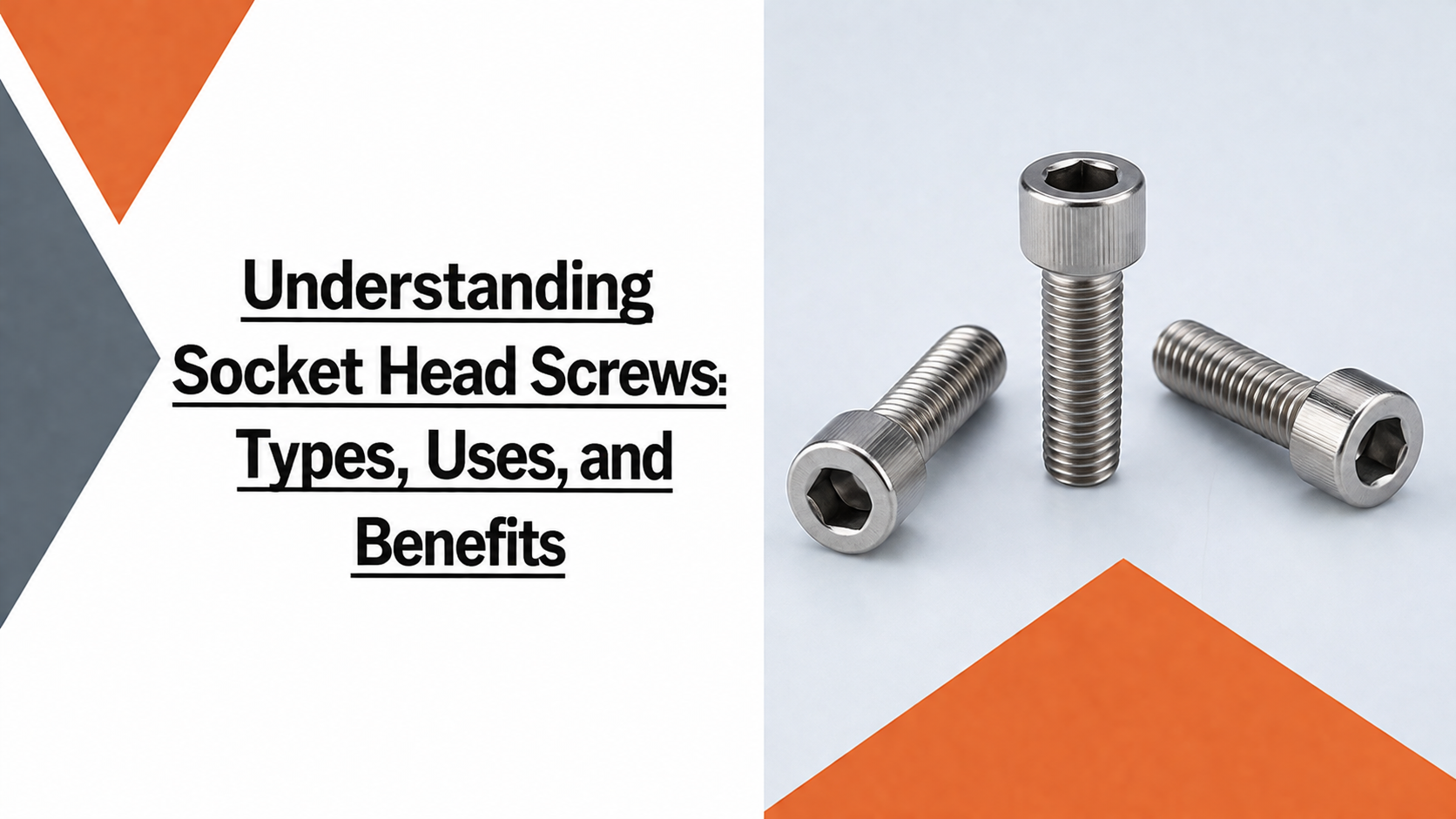
A socket head screw grips harder, fits right and turns with far less risk of slipping than a slotted or Phillips-drive fastener. Engineers prefer it when an assembly needs high torque in a tight footprint, from turbine housings to robotics arms. The recessed hexagonal drive distributes the load across six contact surfaces rather than two, allowing the tool to engage securely under repeated tightening. This single design feature largely explains why socket head cap screws are preferred in joints where slotted heads are prone to stripping or cam-out.
What Are Socket Head Screws?
A socket head screw combines a cylindrical or profiled head with an internal hexagonal recess, a threaded shank, and a hardened alloy body rated beyond commercial screws. The Allen key or hex bit seats fully inside the head, transferring torque through six flat surfaces rather than a single slot. This is why the fastener carries the common name Allen screw, after the Allen Manufacturing Company that popularised the hex-drive format. The design allows installation in recessed holes where a wrench cannot reach, a requirement common across precision machinery assemblies.
Common Types of Socket Head Screws
Head geometry sets clamping strength, installation clearance, and surface finish, so the right choice starts with matching the profile to the joint.
Socket Head Cap Screw
The cylindrical head gives the highest tensile strength in the family and fits counterbored holes for a flush finish. Manufacturers specify it for structural joints under heavy dynamic load.
Button Head Socket Screw
A low, rounded dome replaces the tall cylinder, cutting installation height by roughly 40 percent. Designers pick this profile for exposed covers and guards where appearance matters as much as torque capacity.
Flat Head Socket Screw
An 82-degree countersunk taper pulls the fastener flush with or below the surface once seated. This head suits aircraft skins and enclosure panels that need a smooth outer face free of protrusions.
Low Head Socket Screw
Roughly 60 percent shorter than a standard cap screw head, this variant works where clearance runs tight. It trades some tensile strength for compactness inside confined tooling cavities.
Shoulder Screw
An unthreaded, precision-ground shoulder separates the head from a shorter threaded tip, forming a built-in pivot. Designers rely on it for linkages and cam followers needing a fixed axis rather than clamping force, one detail worth confirming against stainless steel fastener specifications.
Key Benefits of Socket Head Screws
Beyond the hex drive itself, the internal geometry and head design deliver measurable advantages across load, space, and service life.
High Clamping Force
The hardened alloy body and larger effective wrench area allow the fastener to reach a higher preload than slotted or Phillips equivalents of the same diameter. Joints stay tight under vibration and thermal cycling.
Compact Head Design
Cylindrical and low-profile heads fit into counterbored recesses that slotted heads cannot match. This frees up design space in gearboxes and assemblies stacked close together.
Efficient Torque Transfer
Six contact surfaces inside the recess distribute installation torque evenly, reducing rounding and cam-out common with cross-head drives. Technicians apply higher torque without damaging the head.
Reliable Fastening
Consistent thread engagement and alloy strength keep preload stable across repeated assembly cycles. Maintenance crews reuse the same screw multiple times without thread degradation.
Easy Maintenance
A single hex key size serves an entire assembly line, cutting tool changeovers during maintenance. Technicians identify the correct bit size instantly from the head’s recess.
Suitable for Precision Assemblies
Tight manufacturing tolerances on thread pitch and head diameter keep alignment consistent across batches. Instrumentation assemblies depend on that repeatability for accurate fits.
Where Are Socket Head Screws Commonly Used?
Head strength, drive reliability, and compact geometry push socket head screws into industries where standard fasteners fall short under load or space constraints.
Industrial Machinery
Gearboxes and hydraulic units use socket head cap screws to withstand continuous vibration and cyclic loading. The hex drive tolerates higher installation torque.
Automotive
Engine blocks and drivetrain housings rely on socket screws for fatigue resistance under repeated thermal and mechanical stress. Flush-fitting heads also clear tight engine bay clearances.
Aerospace
Flat head and shoulder screws secure skin panels where weight and flushness carry strict certification limits. Alloy grades meet traceability requirements.
Electronics
Low-head and button head variants fasten circuit enclosures without adding bulk. Their small footprint suits densely packed printed circuit assemblies.
Robotics
Shoulder screws create precise pivot points for robotic arms, separating rotational movement from clamping force. Tight tolerances keep joint alignment accurate across millions of cycles.
Tooling and Dies
Die sets and mould bases use socket head cap screws because the counterbored, flush fit avoids interference during high-speed press cycles. Alloy steel resists wear from repeated impact.
Medical Equipment
Surgical instruments use corrosion-resistant socket screws in stainless or titanium grades. Smooth, flush heads simplify sterilisation and reduce contamination risk in cleanroom assembly.
Factors to Consider When Choosing Socket Head Screws
Selecting the right fastener means weighing material, load and environment together rather than picking on price alone.
- Material selection determines fatigue life, so alloy steel, stainless steel or nickel alloy grades suit different stress ranges.
- Load requirements set the minimum tensile and shear strength that the screw must carry under static and dynamic conditions.
- The screw is required to have a minimum tensile and shear strength to meet the load requirements under static and dynamic conditions.
- When exposed to the sea or chemical atmosphere, untreated alloy steel can corrode in months, but in such a case, corrosion resistance may be essential.
- The vibration resistance is affected by the type of thread. Fine threads have a higher preload, and coarse threads resist cross-threading.
- Depending on the operating environment, temperature and chemical exposure, you may need a speciality grade such as Inconel.
- Relevant standards like ISO 4762, DIN 912 and ASTM A574 confirm the dimensional accuracy before procurement.
Best Practices for Installation and Maintenance
Correct installation extends fastener life and prevents the joint failures that cause unplanned downtime.
- Apply the specified tightening torque using a calibrated torque wrench rather than estimating by feel.
- Use an Allen key that fits the recess exactly, to avoid rounding it off, when installing.
- Do not force a misaligned bit into the recess, this damages threads and weakens torque transfer.
- Schedule routine inspection of high-vibration joints to catch preload loss before it causes movement.
- Replace any screw showing thread deformation, corrosion, or a worn recess instead of reusing it.
Conclusion
Matching head style, material grade, and thread type to the actual load turns a routine fastener choice into a reliability decision. Niko Steel & Engineering LLP has stocked socket head screws in stainless steel, alloy steel, and nickel alloy grades for over four decades. These distinctions help engineers specify a screw built to last in its intended assembly.